Kids Nutrition Chart Indian Food: What Every Working Mom Actually Needs to Know
Anjali Sharma
Working Mom | Founder, The Balanced Working Mom
Quick note: I’m sharing what works in our home as a mom, not as a doctor. For supplements, deficiencies, or any health concern, please check with your child’s paediatrician.
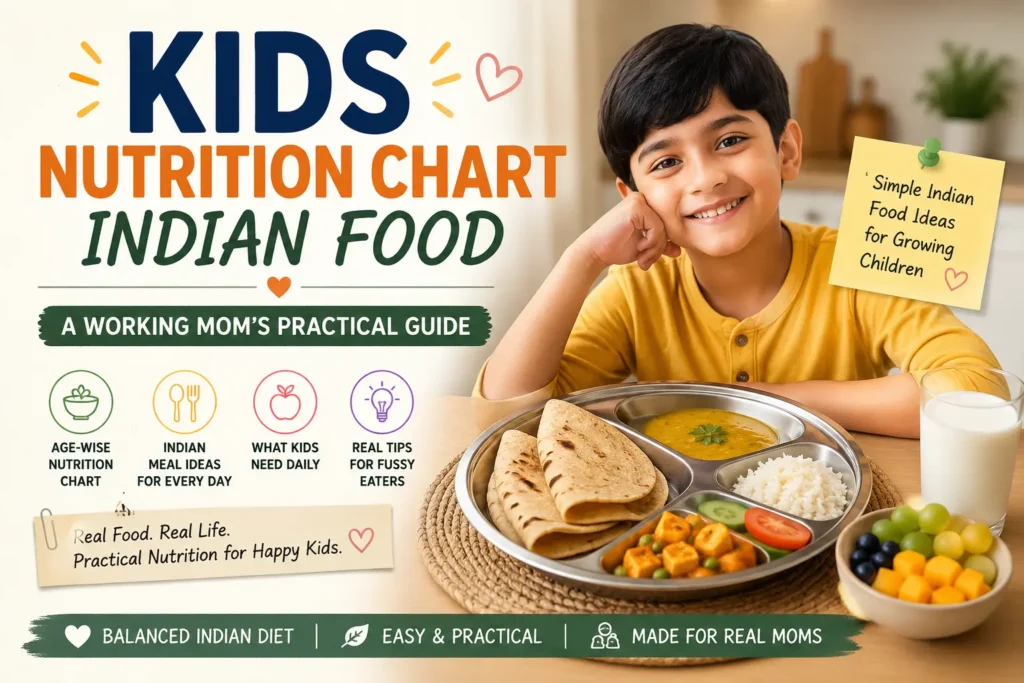
Table of Contents
Let me tell you about a normal morning in our house.
Dhairya wakes up, and before I can even start thinking about a “perfect balanced breakfast,” real life has already started. Some mornings begin with choco milk or Horlicks milk. Then I try to add seasonal fruits because that is one thing I know he will eat without drama. If mangoes are in season, he is happy. If there are apples, bananas, grapes, oranges, or whatever fruit is at home, he will eat them.
Fruits are my safety net.
Then comes the actual food battle.
Most mornings, the safest option is roti. Roti with curd. Roti with dal. Roti with kadhi. Sometimes roti with ghee. If I try to give him a proper sabzi, the answer is usually clear before the plate even reaches him:
“I don’t want to eat it.”
“I don’t like it.”
He is seven. He is healthy, active, strong-willed, and very clear about what he likes. He loves cheese, fruits, tomatoes, cucumbers, roti pizza, and burgers. He refuses almost every Indian sabzi like it has personally offended him.
And honestly, feeding him while managing work, home, school mornings, and everyday life is not easy. Some days I feel like I have figured it out. Some days his tiffin comes back untouched and I start questioning everything again.
This post is not the perfect nutrition chart written by a perfect mom.
This is the real version, from a mom who still wishes her child ate more vegetables, but has also learned that creativity matters more than guilt.
First, A Word About Indian Kids and Nutrition
Most nutrition advice online feels like it is written for a very different kitchen.
They talk about “whole grain servings,” “lean protein,” and “meal prep bowls,” but in most Indian homes, children are eating roti, dal, rice, curd, kadhi, paratha, poha, idli, dosa, fruits, ghee, and whatever sabzi we can convince them to try.
The good news is that Indian food can be very nutritious when there is variety.
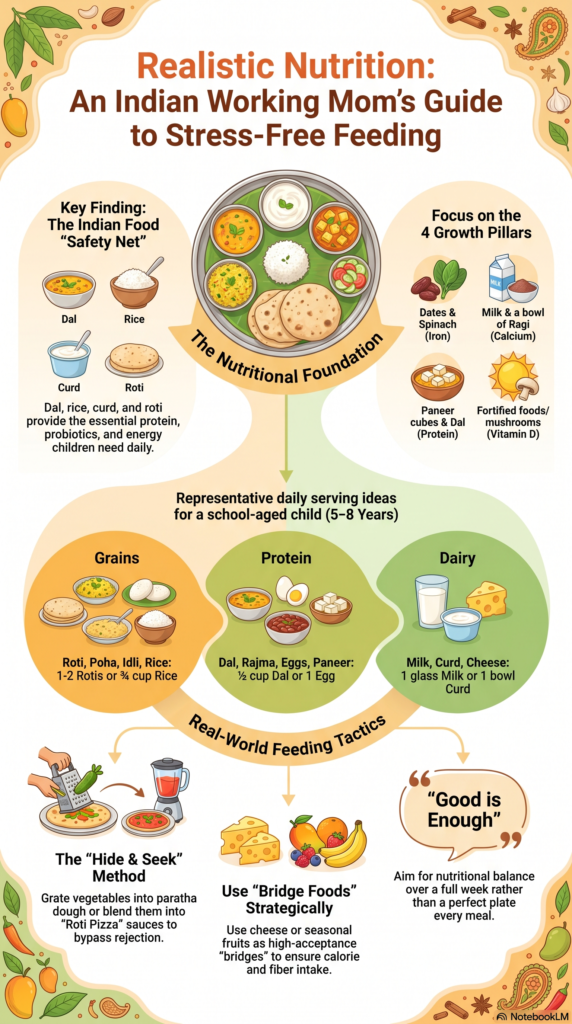
Dal with rice or roti gives protein and energy. Curd adds calcium and probiotics. Ghee, in the right amount, is not something to fear for growing children. Fruits bring fibre and vitamins. Foods like ragi, sesame seeds, paneer, eggs, sprouts, dal, rajma, chana, and seasonal vegetables all have a place in a child’s diet.
The real problem is not that Indian food is bad.
The real problem is getting children to eat enough variety of it.
And when you are a working mom, with school mornings, tiffin packing, office calls, home responsibilities, and sometimes a full joint family giving opinions, nutrition becomes less like a chart and more like a daily negotiation.
So let’s look at what kids need in simple Indian food terms.
Kids Nutrition Chart: What Indian Children Need Daily
Please don’t treat this chart like an exam paper. Children don’t eat perfectly every day. Some days they eat everything. Some days they survive on roti, curd, fruit, and attitude.
The goal is balance over the full day or week, not perfection in every plate.
Age Group: 2–4 Years
| Food Group | Indian Food Options | Simple Serving Idea |
| Cereals & grains | Roti, rice, suji, poha, oats, idli | 1 small roti or ½ cup cooked rice |
| Protein | Dal, moong, masoor, chana, egg, paneer | ¼ cup dal or small paneer pieces |
| Dairy | Milk, curd, paneer, buttermilk | 1 small glass milk or small bowl curd |
| Vegetables | Soft seasonal sabzi, mashed vegetables | 2–3 tablespoons |
| Fruits | Banana, papaya, apple, chikoo, seasonal fruit | 1 small fruit or ½ cup |
| Healthy fats | Ghee, nuts paste, homemade oils | Small amount with meals |
| Water | Water, coconut water, buttermilk | Throughout the day |
Real mom note: At this age, don’t panic if your child eats tiny portions. Their appetite can change daily. One day they eat like they have not seen food before. Next day they reject everything except one roti.
Age Group: 5–8 Years
This is Dhairya’s stage, and honestly, this is where the food opinions become very strong.
| Food Group | Indian Food Options | Simple Serving Idea |
| Cereals & grains | Roti, rice, poha, upma, idli, dosa, paratha | 1–2 rotis or ½–¾ cup rice |
| Protein | Dal, kadhi, rajma, chole, eggs, paneer, chicken | ½ cup dal or 1 egg |
| Dairy | Milk, curd, paneer, cheese | 1 glass milk or 1 bowl curd |
| Vegetables | Seasonal sabzi, salad, hidden vegetables | Small portion with meals |
| Fruits | Banana, apple, mango, orange, guava, grapes | 1–2 fruits |
| Healthy fats | Ghee, nuts, seeds, homemade oils | Small amount daily |
| Iron-rich foods | Palak, methi, ragi, jaggery, dates, rajma | Small amounts across meals |
| Water | Water, buttermilk, coconut water | Throughout the day |
What this looks like in real life:
For Dhairya, a decent day may look like Horlicks or choco milk, seasonal fruits, roti with curd, dal or kadhi, tomatoes, cucumbers, and maybe a homemade roti pizza or burger. Is it the perfect textbook plate? No. But is he getting real food, fruits, dairy, protein, and energy? Yes.
Age Group: 9–12 Years
| Food Group | Indian Food Options | Simple Serving Idea |
| Cereals & grains | Roti, rice, millet roti, dosa, poha | 2–3 rotis or 1 cup rice |
| Protein | Dal, rajma, chole, paneer, egg, chicken, sprouts | ¾ cup dal or 1 egg |
| Dairy | Milk, curd, paneer, buttermilk | 1–2 servings |
| Vegetables | Cooked sabzi, salad, leafy greens | 3–4 servings across the day |
| Fruits | Seasonal fruits | 1–2 fruits |
| Healthy fats | Ghee, nuts, seeds | Small amount daily |
| Calcium-rich foods | Milk, curd, ragi, paneer, sesame seeds | At least one daily source |
| Water | Water, chaas, nimbu pani | Throughout the day |
The Nutrients I Personally Try to Watch
Even when children are eating home-cooked food, there can still be small nutrition gaps. I don’t obsess over this every day, but these are the nutrients I try to keep in mind.
1. Iron
Iron is important for energy, concentration, and growth.
Indian food sources:
Palak, methi, rajma, chana, dates, jaggery, ragi, sesame seeds, dals.
What I do at home:
Dhairya eats spinach, tomatoes, fruits, dal, and sometimes hidden vegetables in parathas or roti pizza. Since he refuses most sabzis, I try to use the vegetables he accepts instead of fighting every day over the ones he rejects.
2. Calcium
Calcium is important for growing bones and teeth.
Indian food sources:
Milk, curd, paneer, cheese, ragi, sesame seeds.
What I do at home:
Milk and curd are regular for us. He likes curd with roti, and cheese is honestly one of my biggest tools. If cheese enters the meal, acceptance chances go up immediately.
3. Vitamin D
Vitamin D helps the body use calcium properly.
Sources:
Morning sunlight, eggs, some fortified foods, and supplements if your doctor recommends them.
Real mom note:
This is one thing I would not guess on my own. If you are worried, speak to your paediatrician. Many children spend a lot of time indoors because of school, homework, heat, screen time, and city life.
4. Protein
Protein helps with growth and strength.
Indian food sources:
Dal, kadhi, paneer, curd, milk, eggs, sprouts, rajma, chole, chicken.
What works for us:
Dhairya eats roti with dal, curd, or kadhi, so I try to make those count. If a child is not eating sabzi, at least dal and curd can still support the meal.
5. Fruits and Fibre
This is one area where I feel lucky.
Dhairya eats a lot of fruits. Seasonal fruits are a daily part of his routine, and that gives me some peace. Fruits are not a replacement for vegetables, but they do bring vitamins, fibre, hydration, and natural sweetness.
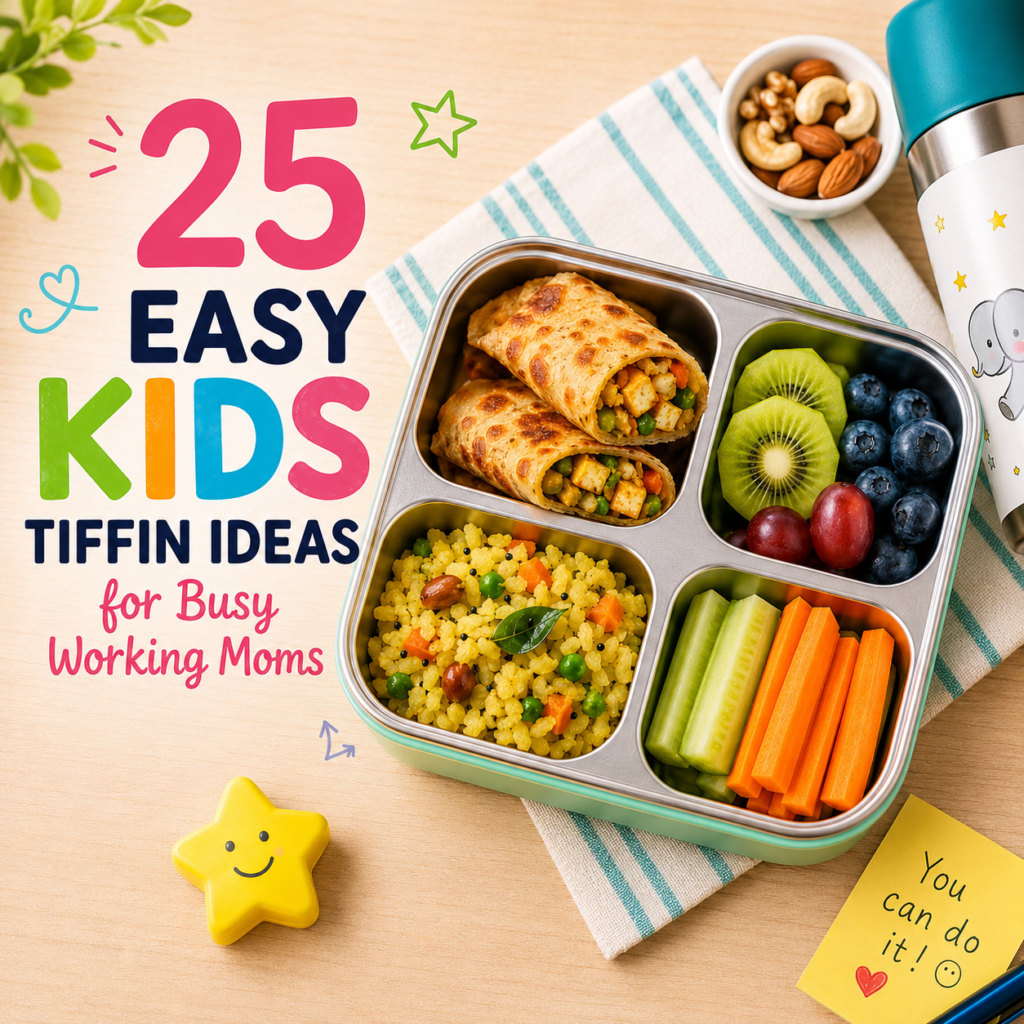
Some children refuse fruits too, so if your child eats them happily, use that strength. If you are looking for simple lunch box ideas, you can read our article on easy kids tiffin ideas.
What Dhairya Actually Eats
Here is Dhairya’s real food list, because I know another mom somewhere needs to hear this.
He eats roti with curd, dal, or kadhi. He eats a lot of fruits. He eats tomatoes and cucumbers happily. He loves cheese so much that if cheese is involved, the chances of the meal being accepted go up immediately.
He likes roti pizza and burgers, and I usually try to make them at home. Outside food happens, but I keep it to around once a month.
What he does not eat is simple: almost any Indian sabzi.
Bhindi, lauki, tori, tinda, mixed vegetable curry — most of it gets rejected. Sometimes he does not even taste it. He just looks at it and says, “I don’t want to eat it. I don’t like it.”
Earlier, this made me feel really guilty.
I kept thinking, “Why can’t he just eat normal sabzi like other kids?”
But slowly I realised that nutrition is not only one sabzi on one plate. If he is eating dal, curd, kadhi, fruits, tomatoes, cucumbers, milk, and homemade meals, he is still getting a lot of good food into his body.
Would I be happier if he ate more vegetables? Of course. I still wish that.
But I have stopped treating every rejected sabzi like a motherhood failure.
The Roti Pizza Method
This is one of my most used tricks.
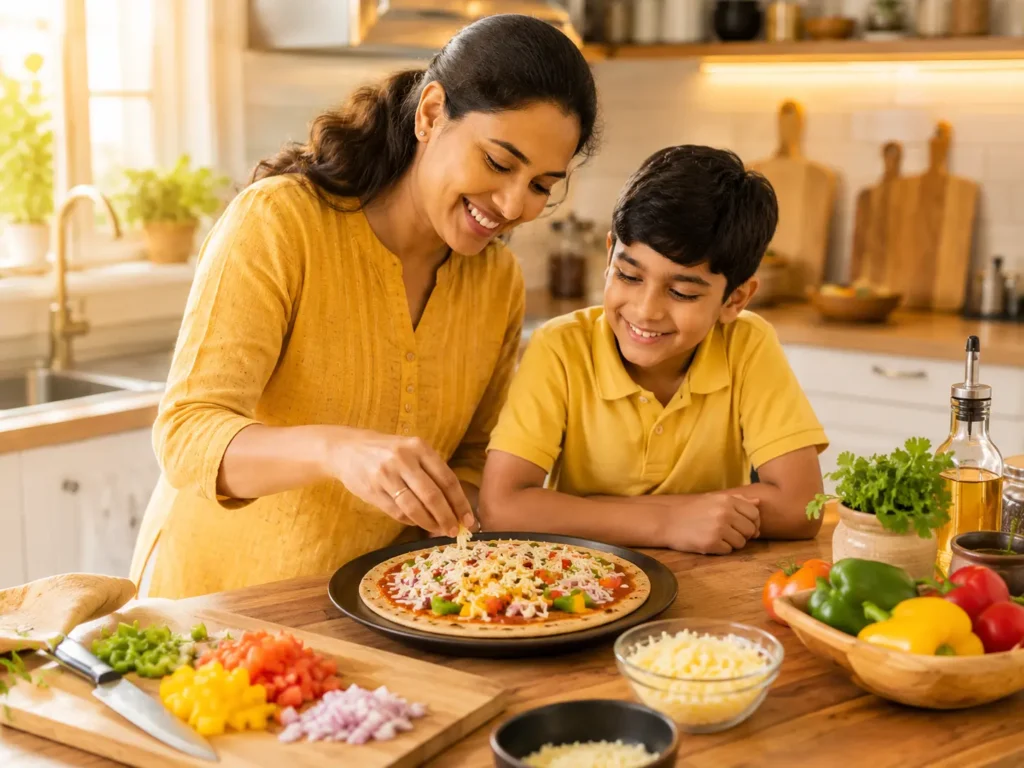
Take a roti. Add a little pizza sauce or tomato base. Add whatever finely chopped or grated vegetables you can manage. I use things like capsicum, carrot, corn, or sometimes whatever is already in the fridge. Add cheese on top. Heat it on a tawa until the cheese melts.
That’s it.
To Dhairya, it is pizza.
To me, it is roti, vegetables, tomato, and cheese entering his stomach without a debate.
I also try homemade burgers. Not the outside-food type every week, but a simple version at home. A bun or roti-style base, a patty where I can hide some vegetables, cheese because that is his weakness, and some cucumber or tomato on the side.
Does this mean he is eating a full bowl of sabzi? No.
But is he eating vegetables in some form? Yes.
And honestly, sometimes that is enough.
Paratha Is My Other Hiding Place
Paratha is one of the best places to hide vegetables.
You can mix grated carrot, beetroot, spinach puree, methi, lauki, or even a little mashed vegetable into the dough or stuffing. Some children notice everything, so start small. Don’t suddenly turn the paratha bright green and expect no questions.
With fussy eaters, the trick is not to make the food look too “new.”
If your child likes regular paratha, change it slowly. Add a little vegetable first. Then increase it over time.
And if one trick fails, it is fine. Every child is different. Some kids will accept palak paratha. Some will act like you have ruined their life.
That is normal.
The Tiffin Reality
Tiffin is its own emotional drama.
Some days Dhairya finishes everything and I feel like I have cracked motherhood.
Some days the same food comes back untouched.
There is no fixed logic. It depends on his mood, school day, friends, playtime, weather, and maybe the position of the moon. I have stopped trying to understand it fully.
The same child who finishes roti pizza happily at home may bring it back from school. The same child who refused something last week may suddenly eat it today.
So now I try not to panic over one tiffin box.
If the tiffin comes back full, I don’t immediately decide the food has failed. I try again another day, maybe in another form.
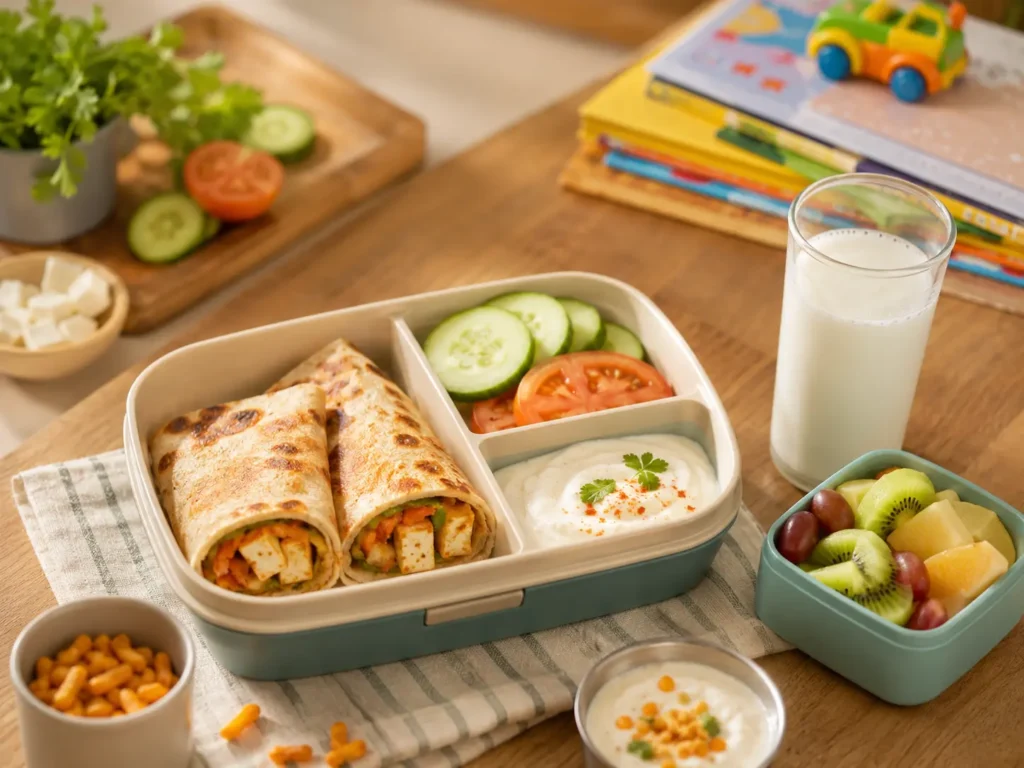
Tiffin ideas that usually work better for us
- Roti pizza with cheese
- Paratha with curd
- Roti roll with paneer or cheese
- Fruit box
- Cucumber and tomato slices
- Homemade burger
- Simple roti with something he already accepts
- Small portion of dal rice or kadhi rice if he is in the mood
The main thing I have learned is this: school tiffin is not the place where I experiment too much. Morning is already rushed. I would rather pack something familiar and add nutrition quietly.
About Drinks: Real Life vs Ideal Life
In an ideal world, children would drink only water, milk, buttermilk, coconut water, and homemade drinks.
In real life, children also ask for things like Rasna or sweet drinks sometimes.
I don’t want to pretend those things don’t exist. They do. But I also don’t treat them as nutrition. For me, the base is still milk, fruits, curd, dal, roti, water, and homemade food. Sweet drinks are occasional, not the foundation.
ORS is something I would personally keep for when it is actually needed, like dehydration or illness, or when advised by a doctor. For daily hydration, plain water is still the best.
The Joint Family Dynamic
One thing I have learned in a joint family is that feeding a child is not only the mother’s job, even if we sometimes put that pressure on ourselves.
In our house, Dadu has his own way of showing love.
He sits with Dhairya and feeds him every bite with his own hands. I’ll be honest — I don’t always love this habit. A part of me thinks, “He should eat on his own.”
But for Dadu, this is love.
This is his way of caring for him.
And the truth is, Dhairya eats better with him.
When I am tired, when I have already tried convincing him, when I am getting frustrated, Dadu will sit patiently and feed him one bite at a time. Sometimes that is what gets the dal, curd, or kadhi into him.
I have learned to accept that help instead of feeling guilty about it.
As a family, we try to focus on what Dhairya does eat instead of only stressing about what he refuses. He eats fruits really well, so we use that. He likes milk, so we give him Horlicks or choco milk. He likes tomatoes and cucumbers, so those are regular.
And because I still worry about nutrition gaps, we also give him multivitamin gummies. We use Little Joys, and I personally found them helpful for our routine. But please check with your child’s doctor before adding any supplement, because every child is different.
This is not about being perfect.
It is about finding what works for your child and using that without guilt.
A Simple Indian Kids Daily Diet Chart
Here is a practical daily diet chart for Indian kids, especially if your child is around 5–8 years old.
Again, this is not a strict rule. Use it as a flexible guide.
Morning
Option 1: Milk + seasonal fruit + roti with ghee or curd
Option 2: Horlicks/choco milk + fruit + paratha
Option 3: Poha/upma/idli + fruit
Option 4: Roti with dal or kadhi if your child likes heavier breakfast
School Tiffin
- Option 1: Roti pizza + fruit
- Option 2: Cheese paratha + cucumber slices
- Option 3: Paneer roll + fruit
- Option 4: Homemade burger + tomato/cucumber
- Option 5: Simple roti with curd or dry filling
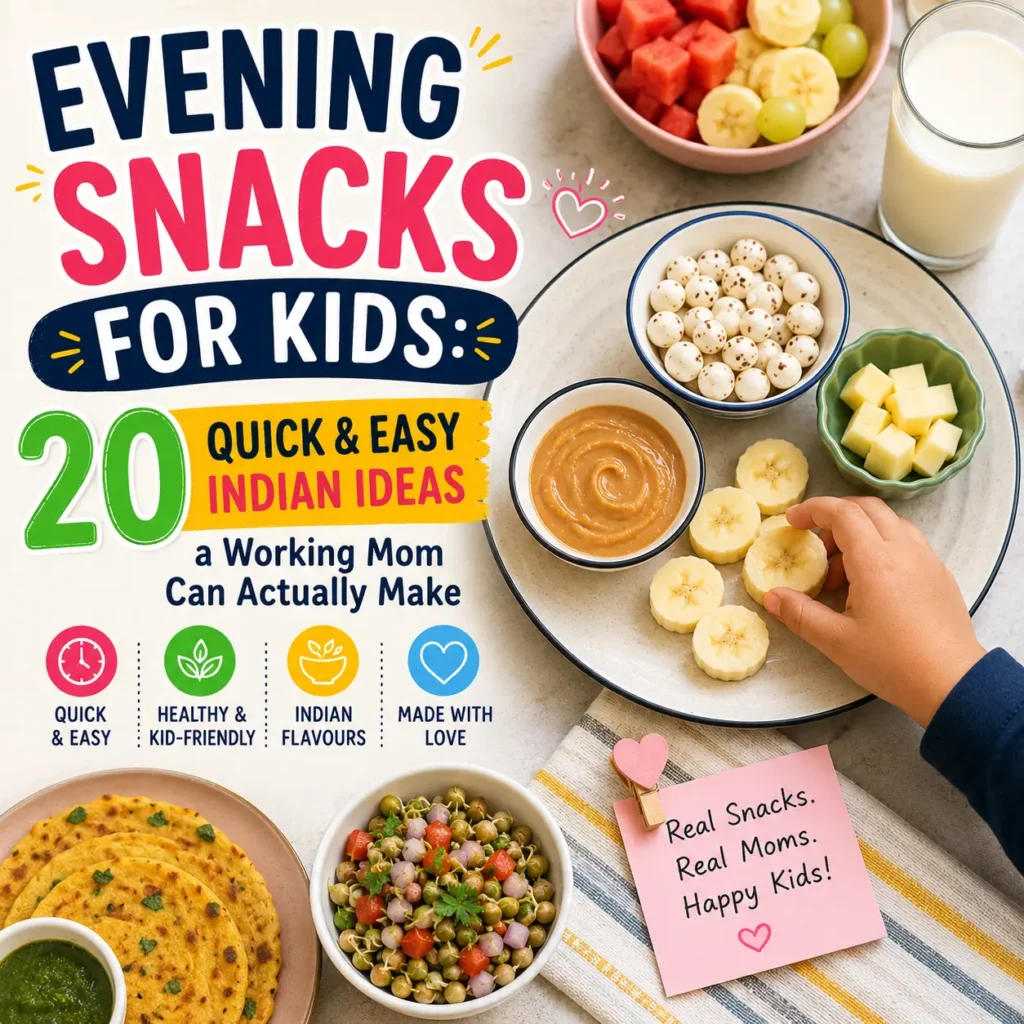
After School / Evening Snack
- Option 1: Fruit bowl
- Option 2: Milkshake with banana
- Option 3: Curd with fruit
- Option 4: Cheese toast or paneer toast
- Option 5: Nuts or seeds if your child can chew them safely and accepts them
Dinner
- Option 1: Roti + dal + curd + cucumber/tomato
- Option 2: Kadhi + rice + salad
- Option 3: Khichdi with ghee
- Option 4: Paratha with hidden vegetables + curd
- Option 5: Homemade roti pizza if nothing else is working
Minimum I Try to Hit in a Day
On a good day, I try to make sure Dhairya gets:
- One dairy source: milk, curd, cheese, or paneer
- One protein source: dal, kadhi, paneer, egg, or sprouts
- One fruit serving, usually more because he loves fruits
- Some vegetable, even if it is hidden
- Enough water
- A homemade base meal like roti, dal, rice, or paratha
If this happens, I call it a good feeding day.
Not perfect. Good.
And good is enough.
What If Your Child Refuses Sabzi?
First, breathe.
You are not the only mom dealing with this.
Some children refuse sabzi because of texture. Some because of smell. Some because the vegetables are mixed. Some because they don’t like anything “wet.” Some because they saw one green thing and decided the whole dish is suspicious.
Instead of forcing a full bowl of sabzi, try this:
1. Use the vegetables they already accept
For Dhairya, tomatoes and cucumbers work. So I use them. Are they the only vegetables I want him to eat? No. But they are a start.
2. Hide vegetables without guilt
Add grated vegetables to paratha, roti pizza, burger patties, dosa batter, cheela, or sauce.
This is not cheating.
This is feeding your child.
3. Keep offering without pressure
I still offer sabzi. I just don’t turn every meal into a fight. Sometimes he says no. Sometimes he surprises me.
4. Use cheese if it helps
Some moms may disagree, but in my house, cheese is a bridge food. If cheese helps vegetables enter the meal, I use it.
5. Think weekly, not daily
One bad food day does not mean your child is undernourished. Look at the full week.
A Note on Packaged “Health” Foods
There are so many health drinks, cereals, biscuits, and snacks marketed to parents in India. Every brand promises growth, immunity, height, strength, brain development, and everything else a mother worries about.
My honest view is simple: real food should be the base.
Dal, roti, rice, curd, fruits, vegetables, paneer, eggs, sprouts, nuts, homemade snacks — these should come first.
Packaged foods can exist in real life, but they should not become the foundation.
In our house, I don’t act like packaged food is banned forever. That is not realistic. But I try to keep the main diet home-based. Outside food is usually around once a month. Homemade roti pizza or burger is my middle path — it feels fun for Dhairya, but I still know what went into it.
What I Have Stopped Worrying About
I have stopped worrying that he will never eat vegetables.
I genuinely believe he will grow into it slowly. Maybe not today. Maybe not this month. But as he grows, tastes will change.
I have stopped thinking that one refused sabzi means I failed.
I have stopped comparing his plate to another child’s plate.
I have stopped believing that a good mother is the one whose child eats every vegetable quietly.
A good mother is also the one who tries again tomorrow.
A good mother is the one who cuts fruit because that is what the child will eat.
A good mother is the one who hides vegetables in paratha because direct sabzi is not working.
A good mother is the one who allows Dadu to feed the child because that is his love language.
A good mother is the one who feels guilty, but still keeps going.
Frequently Asked Questions
What is a good nutrition chart for Indian kids?
A good Indian kids nutrition chart should include cereals like roti or rice, protein like dal, paneer, eggs, or sprouts, dairy like milk or curd, fruits, vegetables, healthy fats, and enough water. But remember, children may not eat everything in one meal. Look at the full day or week.
Is roti with curd enough for breakfast?
Roti with curd is a decent simple breakfast because it gives energy, some protein, calcium, and probiotics. To make it more balanced, add fruit, ghee, paneer, dal, or a small handful of nuts depending on your child’s age and preference.
What should I do if my child does not eat sabzi?
Start with the vegetables your child already accepts. Then slowly add hidden vegetables into paratha, roti pizza, burger patties, dal, dosa batter, or sauces. Keep offering sabzi without turning every meal into a fight.
Are fruits enough if my child refuses vegetables?
Fruits are very healthy and helpful, but they should not fully replace vegetables. If your child loves fruits, use that as a strength, but keep trying vegetables in small and creative ways.
Is cheese okay for kids?
Cheese can be part of a child’s diet, especially if it helps them accept homemade meals. The key is balance. I use cheese in roti pizza, paratha, or homemade burgers because it helps Dhairya eat better, but I still try to keep the meal home-cooked.
Should I give my child multivitamin gummies?
Please ask your paediatrician before giving supplements. In our home, we use multivitamin gummies and found them helpful for our routine, but supplements should not replace real food.
What is the best food for fussy eaters in India?
There is no one best food. For many Indian kids, safe foods are roti, dal, curd, rice, fruit, paneer, paratha, dosa, idli, or poha. Start with what your child already likes and slowly improve it.
How do I make healthy food interesting for kids?
Make it look familiar. Roti can become pizza. Paratha can hide vegetables. Fruit can become chaat. Milk can become a banana shake. A homemade burger can carry vegetables quietly. Kids often accept the same nutrition better when it looks fun.
The Thing I Want Every Mom To Remember
You are not a bad mom because your child refuses sabzi.
You are not a bad mom because the tiffin came back untouched.
You are not a bad mom because your child loves cheese more than lauki.
You are not a bad mom because you gave Horlicks milk in the morning and called it a win.
You are not a bad mom because Dadu feeds him every bite and you secretly wish he would eat on his own.
You are just a mom trying to feed a real child, not an imaginary child from a perfect parenting article.
Dhairya still refuses most vegetables. He still says, “I don’t want to eat it.” He still has moody tiffin days. He still loves roti, curd, fruits, cheese, tomatoes, cucumbers, roti pizza, and burgers more than any sabzi I make.
And he is okay.
He is growing. He is active. He is loved. He is fed.
That is what I remind myself on the hard days.
As moms, we don’t always need to be perfect. We need to be creative. We need to understand our child. We need to play according to what they like and slowly make the healthy food reach them in a way they accept.
Some days that looks like dal roti.
Some days that looks like fruit and curd.
Some days that looks like vegetables hiding under cheese on a roti pizza.
And some days, that is more than enough.

Hey there,
I’m Anjali, founder of The Balanced Working Mom.
I write for modern Indian women navigating marriage, career, motherhood, home, and the quiet identity shifts that happen in between.
Everything I share comes from real life — from managing work and family to learning, slowly, how not to lose yourself while building a beautiful life.